15 Jun 2026
Mechanics of Progressive Jackpot Pools: The Technical Details of Their Growth and Prize Allocation
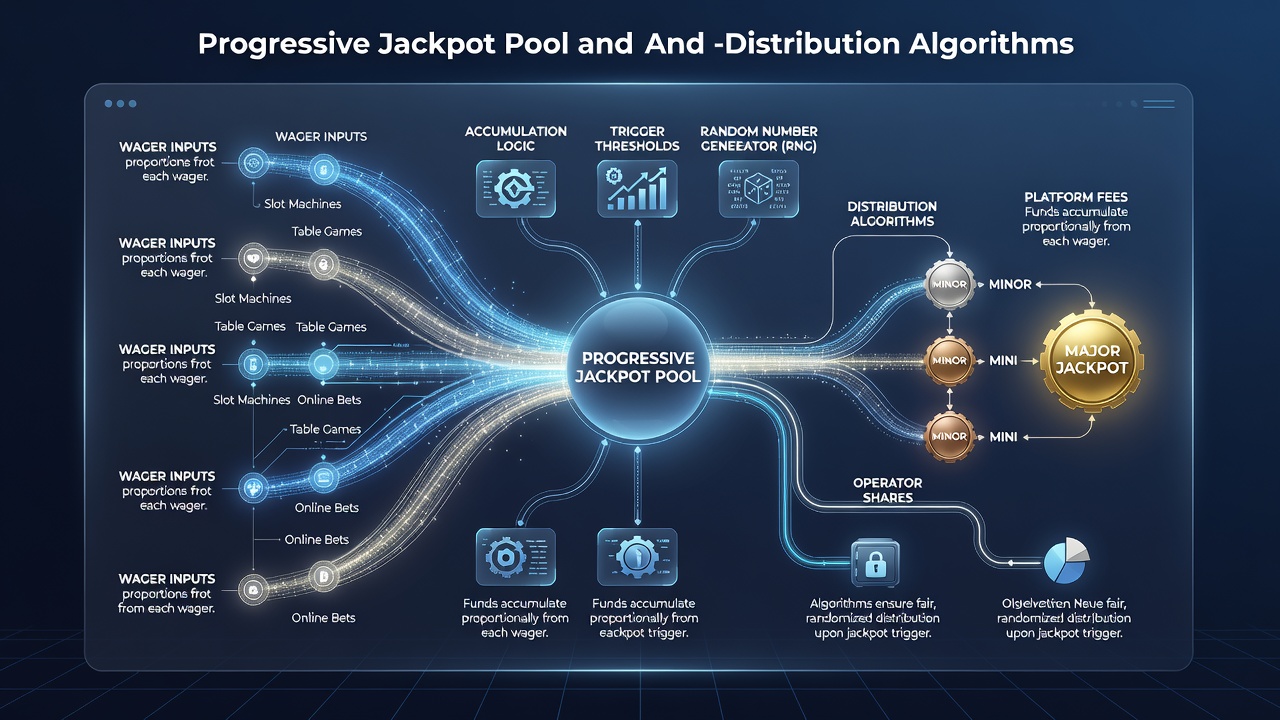 Progressive jackpot pools grow through a fixed percentage of each qualifying bet that feeds directly into a shared prize fund, and this contribution model creates the escalating totals that distinguish these systems from fixed-payout games. Operators typically allocate between one and five percent of every eligible wager to the pool while the remainder covers standard returns and operational costs. Multiple machines or game instances link together so that contributions accumulate faster than they would on isolated terminals, and this linkage extends across online platforms or physical casino floors depending on the network configuration. The base seed amount resets the pool after each payout and ensures the jackpot never falls below a guaranteed minimum, which regulators in various jurisdictions require to maintain player interest and fairness standards. Software algorithms track every contribution in real time and update the displayed total across all connected displays without delay. When a player places a qualifying bet, the system records the exact contribution timestamp and amount before adding it to the running total, which prevents discrepancies during high-volume play periods. Distribution algorithms determine the trigger moment for a jackpot payout through random number generation that operates independently of the pool size or contribution rate. A central server generates a random value within a predefined range each time a qualifying bet occurs, and the jackpot triggers when that value matches a preselected target number. This method keeps outcomes unpredictable regardless of how many players participate or how large the current pool has grown, and it satisfies technical standards set by testing laboratories that certify gaming software. Linked progressive systems connect multiple casinos or websites so that a single large pool serves all participants, whereas standalone progressives remain confined to one machine or a small local bank of terminals. The choice between these models affects both the speed of pool growth and the frequency of payouts, since wider networks gather contributions from more sources yet require more complex synchronization protocols to keep totals accurate. Network operators maintain redundant servers and backup connections to handle potential outages, and these safeguards ensure the jackpot total remains consistent even if individual sites experience temporary disruptions. In June 2026 several North American gaming authorities plan to review updated technical standards that address how multi-jurisdictional progressive networks share pool data across state lines. These reviews focus on encryption requirements for contribution data and audit trails that document every transfer between participating operators. Regulators in Nevada already require detailed logging of all pool transactions, and similar frameworks appear in emerging Canadian provincial guidelines that emphasize transparency for cross-border jackpot systems. Allocation formulas also handle secondary prizes that sometimes draw from the same pool or from separate reserve funds. When the main jackpot pays out, a portion of the remaining balance may transfer to a secondary meter that funds smaller progressive awards on the same game, and this layered structure keeps multiple prize levels active simultaneously. Software must calculate these transfers instantly so that the next player sees updated totals without interruption. Researchers at the University of Nevada Reno have examined contribution percentages across major gaming markets and found that networks with higher contribution rates tend to produce larger jackpots but longer intervals between wins. Their analysis of transaction logs shows that average payout intervals scale roughly with the number of active terminals, although random number triggers introduce significant variation around those averages. Industry reports from the European Gaming and Betting Association corroborate these patterns in online environments where player volume fluctuates throughout the day. Security protocols protect the integrity of both the contribution process and the random trigger mechanism through continuous monitoring and cryptographic verification. Any attempt to manipulate bet data or intercept pool updates triggers immediate alerts to the central monitoring system, and certified operators must submit regular reports that detail pool activity to oversight bodies. These measures reduce the risk of technical faults or external interference that could affect prize distribution. Players qualify for progressive jackpots only when they meet specific bet thresholds, usually the maximum wager or a designated side bet that activates teh progressive feature. Systems automatically exclude non-qualifying bets from contribution calculations, and this separation keeps the pool funded exclusively by participants who pursue the larger prize. Display interfaces update the current total after each qualifying bet so that participants see the most recent figure before deciding on their next wager. Secondary distribution rules sometimes reserve a percentage of each contribution for administrative fees or for funding future seed amounts, and these deductions occur before the main pool balance increases. Operators document these percentages in game rules that players can review before placing bets, and regulatory frameworks require clear disclosure of all allocation rates. Transparency in these formulas helps maintain consistent operation across different network sizes and player demographics.
Network Synchronization and Data Integrity
Progressive networks rely on synchronized clocks and timestamp protocols to ensure every contribution receives proper credit regardless of geographic distance between terminals. When a bet occurs on one site, the local server sends an encrypted packet containing the contribution amount and timestamp to the central pool manager, which then broadcasts the updated total back to all displays. This round-trip communication must complete within milliseconds to avoid displaying outdated figures during peak activity periods.
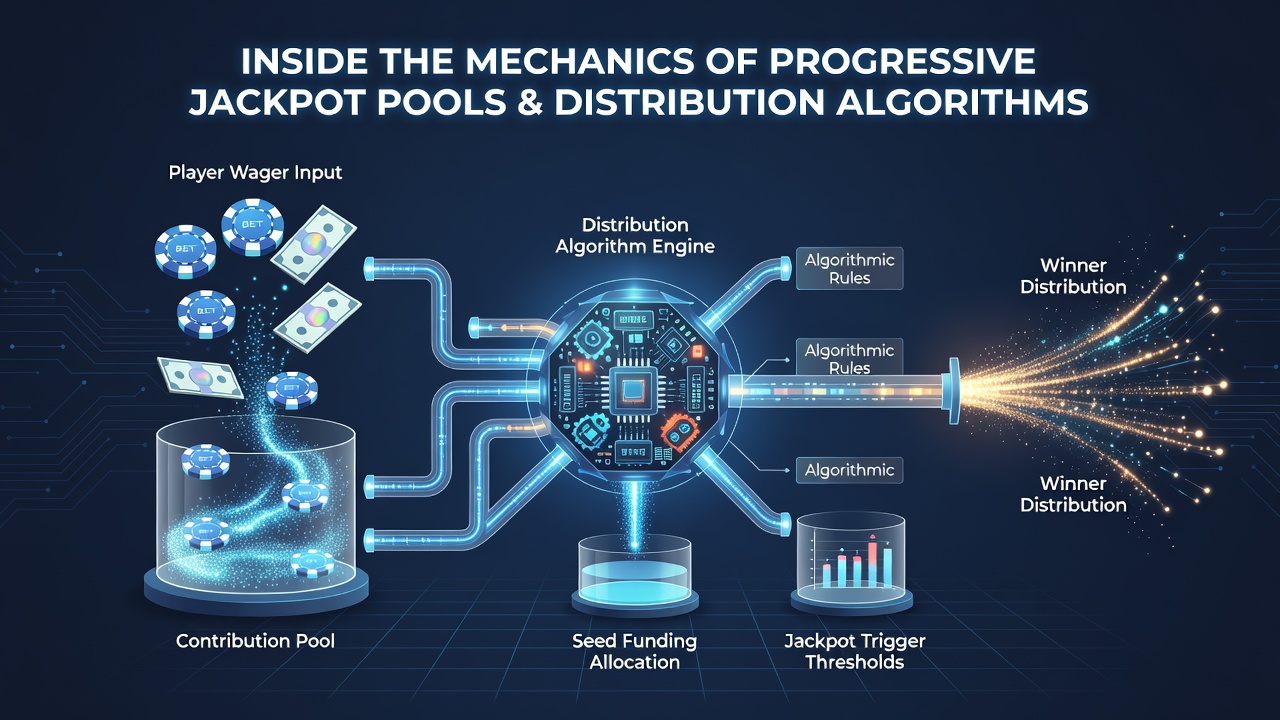
Data integrity checks run continuously on every incoming contribution packet, and any mismatch between expected and received values causes the system to flag the transaction for manual review. Operators maintain detailed audit logs that record every synchronization event, which allows independent testers to verify that pool totals have remained accurate throughout each reporting period. These logs also support dispute resolution when players question whether a particular bet contributed correctly to the jackpot.
Conclusion
Progressive jackpot systems combine fixed contribution rates, random trigger algorithms, and multi-layered distribution rules to create large shared prizes that reset and rebuild over time. The technical infrastructure supporting these pools requires precise synchronization across networks, rigorous security measures, and compliance with regional regulatory standards that continue to evolve. Observers note that as participation grows and new jurisdictions enter the market, the underlying algorithms and reporting requirements will likely receive further refinement to preserve both fairness and operational reliability.