9 Jul 2026
Slot Machine Volatility and Its Role in Shaping Long-Term Bankroll Dynamics Within Virtual Casino Settings
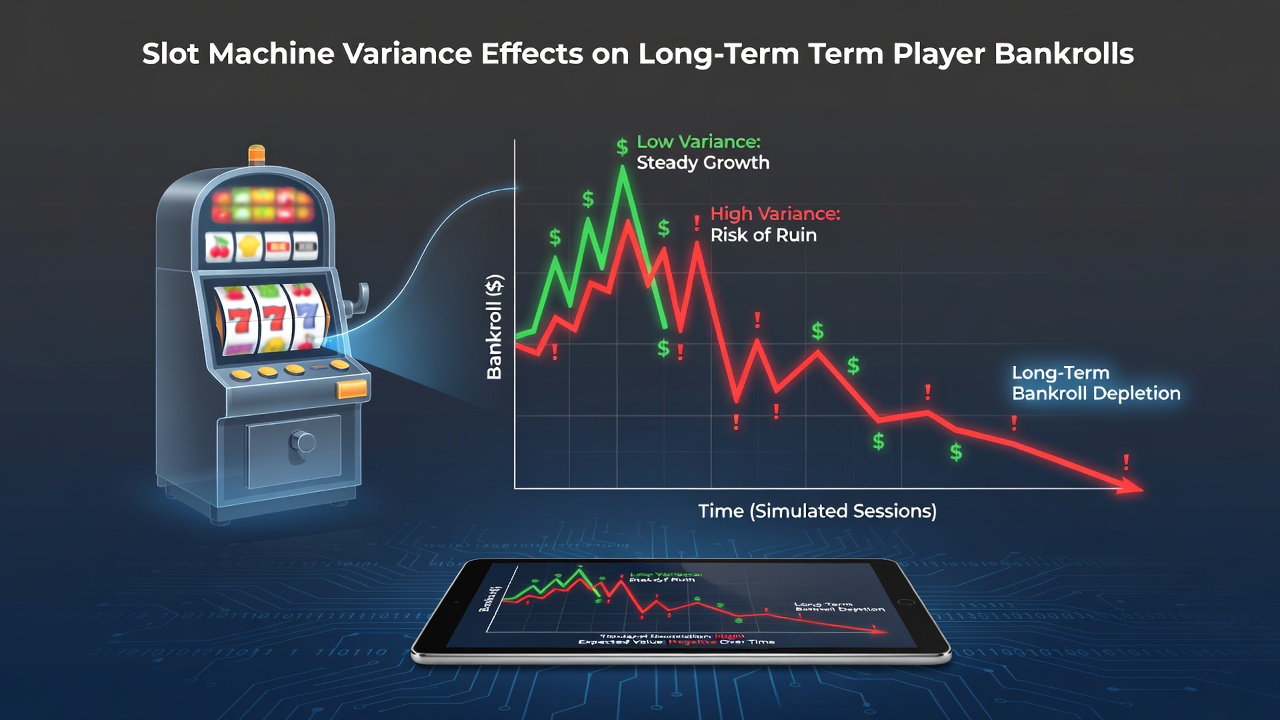
Slot machine variance, often called volatility, determines how payout patterns unfold across thousands of spins in digital environments, and this factor directly influences how player funds fluctuate over extended periods. High-volatility games cluster wins into infrequent but substantial amounts while low-volatility titles distribute smaller returns more evenly, creating measurable differences in bankroll survival rates when sessions stretch into hundreds or thousands of plays.
Defining Variance Through Mathematical Models
Researchers calculate variance using the standard deviation of individual spin outcomes relative to the game's return-to-player percentage, and this metric reveals why certain titles drain balances faster despite identical RTP values. Data from regulated markets shows that a slot with 96 percent RTP and high variance produces larger standard deviations than a comparable low-variance machine, leading to steeper drawdowns before any recovery occurs.
Virtual platforms rely on certified random number generators to enforce these patterns consistently, which means the same volatility profile repeats across sessions regardless of player location or device. Observers note that July 2026 updates from several testing laboratories emphasized stricter auditing of RNG outputs to confirm variance claims match actual gameplay logs submitted by operators.
Bankroll Erosion Patterns in Extended Sessions
Long-term simulations demonstrate that high-variance slots increase the probability of hitting zero balance within the first 5,000 spins compared with low-variance alternatives, even when both games share identical theoretical returns. Players maintaining fixed bet sizes encounter sequences of 50 or more consecutive losses more frequently on volatile titles, which accelerates depletion unless bet adjustments occur mid-session.
Studies tracking anonymized account data across multiple jurisdictions indicate that participants who switch between variance levels mid-session often stabilize their remaining funds better than those who remain fixed on one category. This pattern emerges because alternating volatility types interrupts extended losing streaks that characterize high-variance environments.
Impact of Digital Features on Variance Perception
Bonus rounds and progressive jackpots embedded in virtual slots amplify effective variance because these features concentrate large portions of the overall return into rare triggers. A game may advertise moderate base-game variance yet deliver extreme swings once free-spin multipliers or jackpot contributions activate, and this layered structure alters bankroll trajectories in ways simple RTP figures cannot predict.
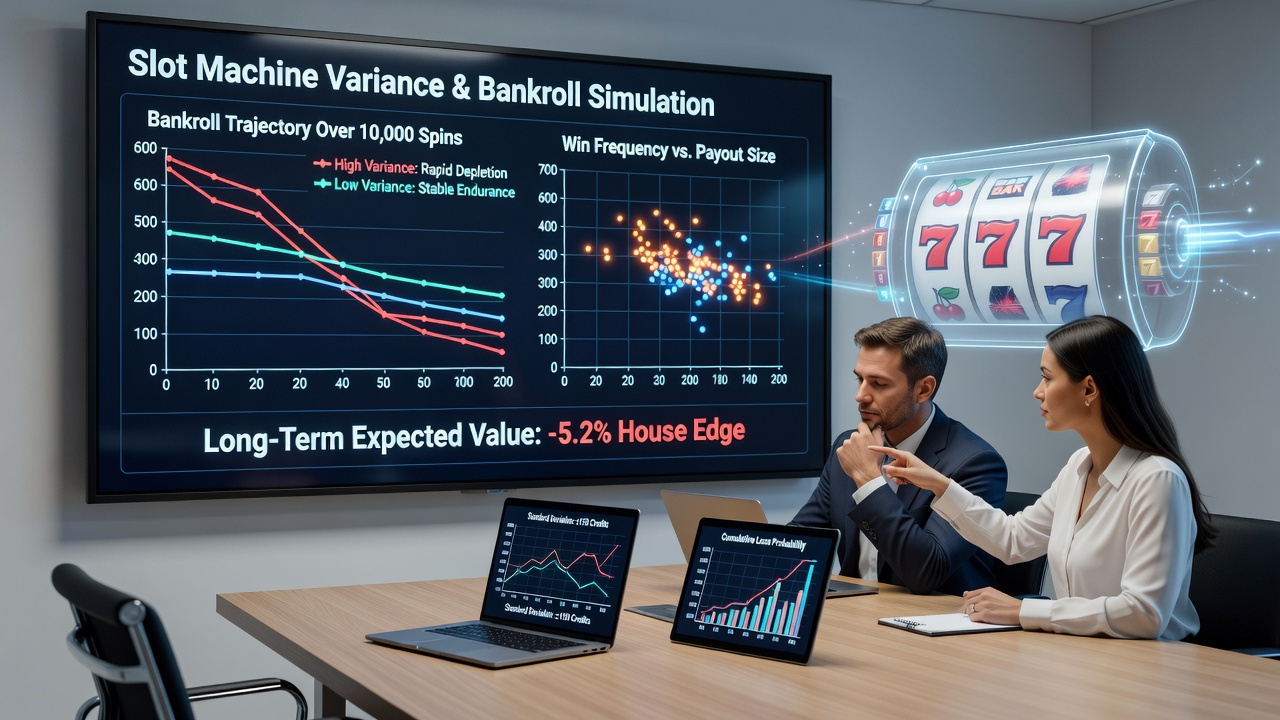
According to analysis published by the Nevada Gaming Control Board, operators must disclose variance classifications during game certification, and these disclosures help regulators monitor whether advertised profiles align with observed player outcome distributions. The same documents note that virtual environments enable precise logging of every spin, allowing variance calculations to incorporate millions of results rather than relying on smaller sample sets typical of land-based machines.
Regional Regulatory Approaches to Volatility Disclosure
Canadian provincial regulators require operators to publish volatility indices alongside RTP percentages, and this practice provides players with standardized metrics when selecting titles for longer sessions. European testing bodies have adopted similar frameworks that categorize games into low, medium, and high bands, creating consistency across platforms licensed in multiple member states.
Academic papers from institutions examining gambling mathematics highlight that variance awareness alone does not alter house-edge mathematics, yet it does affect the duration a bankroll can sustain play before reaching predefined loss limits. One analysis of transaction records from Australian online operators revealed that sessions exceeding 2,000 spins on high-volatility titles showed higher rates of early termination due to balance exhaustion.
Practical Considerations for Session Planning
Bankroll management models incorporate variance estimates to set stop-loss thresholds and bet-sizing rules, and these models perform differently depending on whether a player selects steady or swing-heavy titles. Software tools available on many platforms now display real-time volatility indicators derived from recent spin history, although these indicators reflect short-term deviations rather than long-term theoretical values.
Industry reports compiled by research groups such as the National Council on Problem Gambling emphasize that understanding payout distribution helps individuals recognize when results align with expected variance rather than assuming external interference. This recognition matters because virtual environments deliver outcomes at accelerated speeds, compressing what would represent weeks of physical machine play into hours of digital engagement.
Conclusion
Slot machine variance shapes bankroll trajectories through predictable statistical mechanisms that remain consistent across virtual platforms when certified RNG systems operate correctly. Extended play data confirms that high-volatility selections produce wider outcome ranges while low-volatility options maintain narrower, steadier paths, and these differences persist regardless of promotional features layered onto the base game. Regulatory disclosures and academic modeling continue to refine how variance information reaches players, supporting more accurate expectations for session length and fund preservation in online environments.